
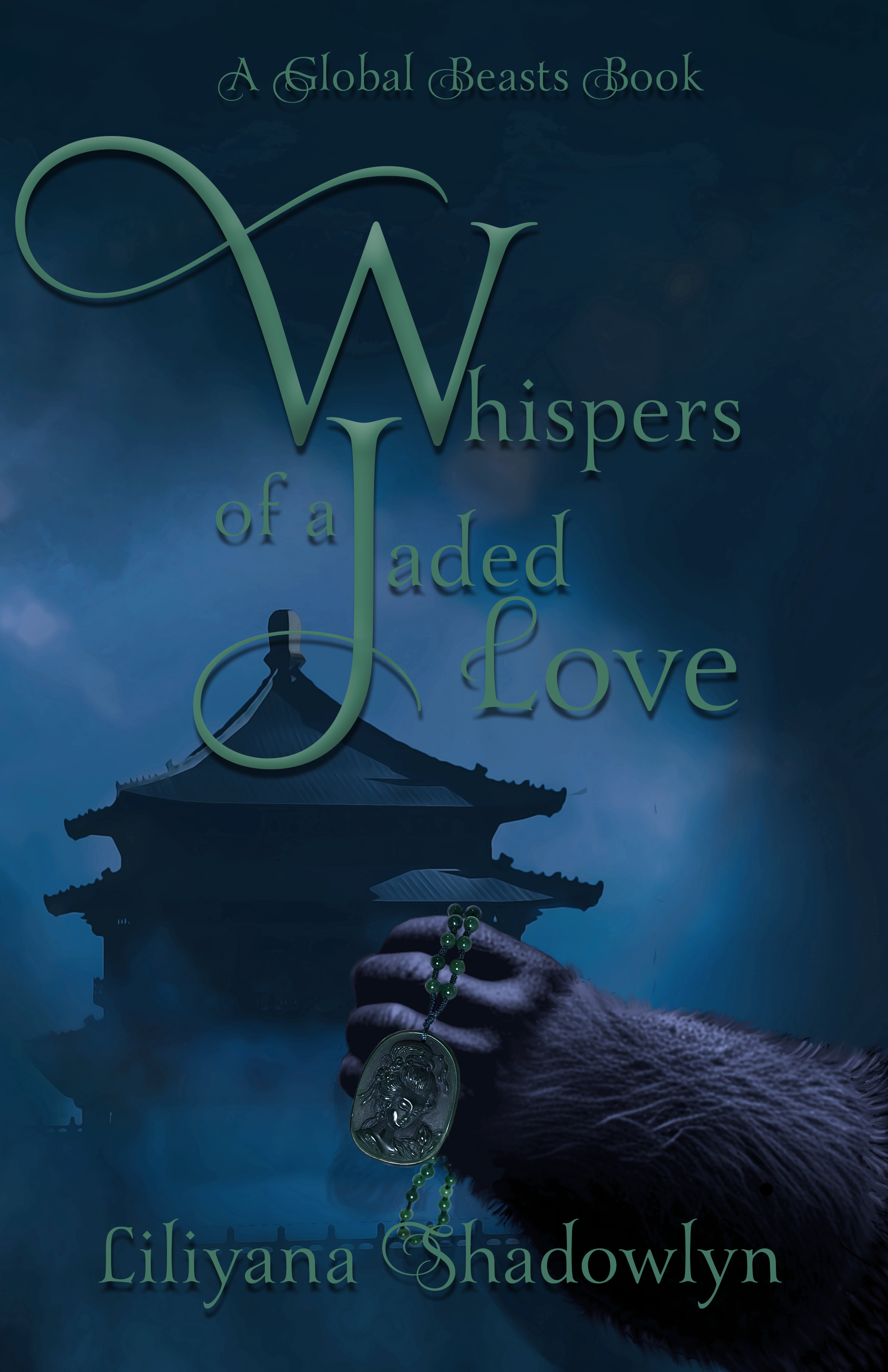
Whispers of a Jaded Love by Liliyana Shadowlyn
The wind isn’t the only thing whispering by the river…
Jiǎo was born into privilege, and into the wrong body. With the new emperor seeking a bride, she knows time is running out. Fleeing a fate worse than death, she runs into the forest, casting away her golden bracelets one by one as an offering to the spirits who promise a path to freedom. Her final gift, offered in a moment of true desperation, an heirloom jade pendant unlocks a strange magic; transforming her into a regal panda. Powerful and masculine at last, Jiǎo no longer feels like a stranger in his own skin. But freedom comes with a price: he can never leave the estate’s grounds again, animated objects and the river spirits his only companions.
Zìsī has spent her life running; from a mother who never wanted her, from a husband who breaks more than bones, from a world that refuses her a place. To win her freedom, she turns her husband’s most loyal weapon against him: the bodyguard set to watch her. With soft words and calculated glances, she tangles him in desire until his vigilance falters and her path opens. But escape is only the beginning. In the hidden estate of a beastly master, Zìsī glimpses what she craves most: safety, and the means to buy it. A jade pendant, rare and unmistakable, gleaming like fate in her palm. It is the very heirloom described on a noblewoman’s missing poster, promising a reward too rich to abandon, even if it means betraying yet another refuge.
Torn between survival and compassion, truth and betrayal, both Jiǎo and Zìsī must face what they’re willing to sacrifice for the chance to live as their true selves. Can love bloom in the shadows of broken pasts and whispered magic, beside a river of spirits?
Tropes
Beauty and the Beast Retelling
Forbidden Love
Morally Gray Beauty
Family Honor vs. Individual Freedom
Slow Burn
Ancestral Spirits
LGBTQIA+ Rep
Revenge
Warnings
Murder (on and off page)
Sexual Assault/Rape
Domestic Viloence
Violence
Reference to infanticide
Suicidal Ideation
Death
Learn more about the Global Beasts Shared World
Meet the Characters
Character art by Grady Earls at Ghost Writer Book Cover Design
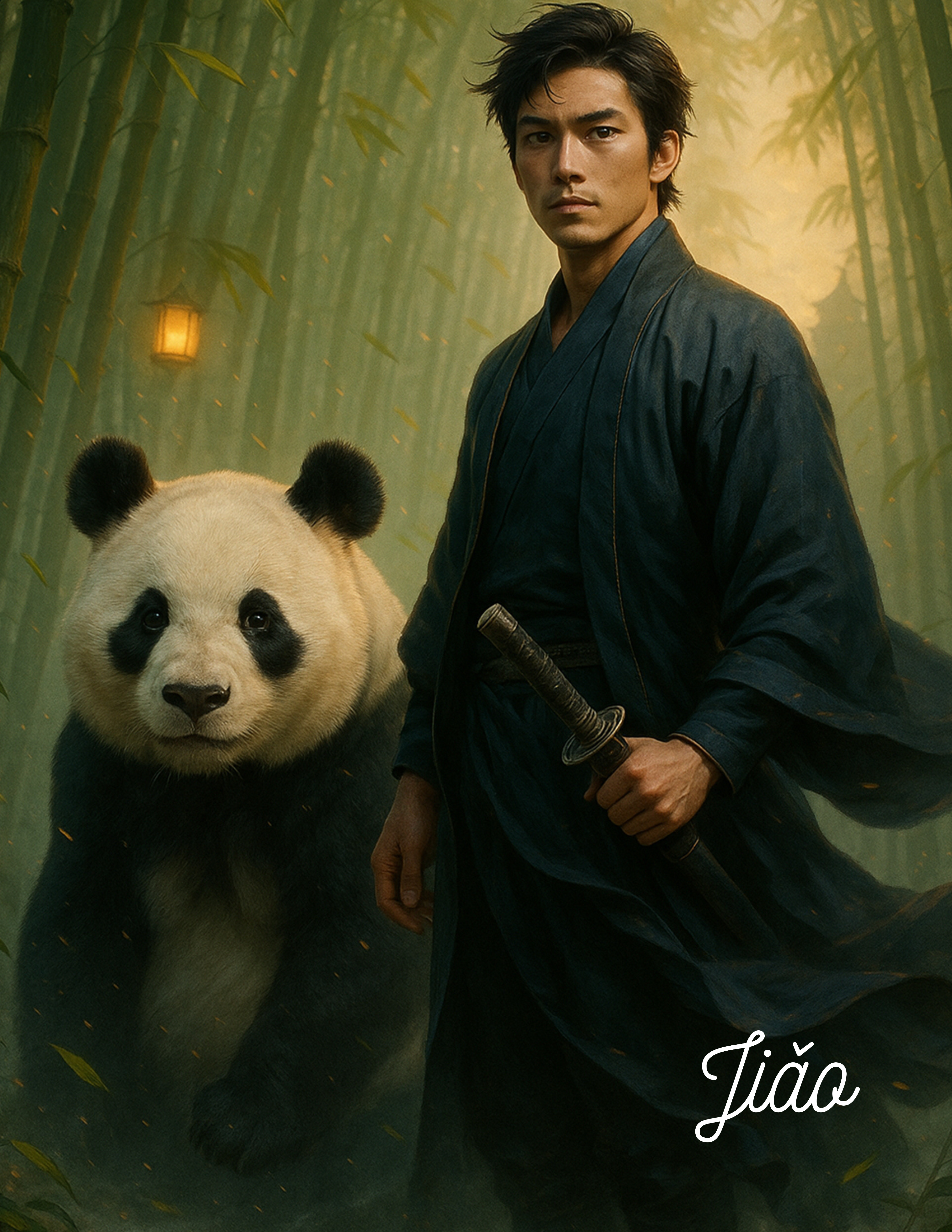
Name: Jiǎo
Age: 18
Favorite Hobby: Reading
Pet Peeves: Being turned into a panda, being bound by tradition and filial piety
Goal in Life: Live life in the correct body, without having to lie or bow down to a man
Ideal Date: Watching the stars
Red Flags: Gets angry easily when unable to do something on the first try
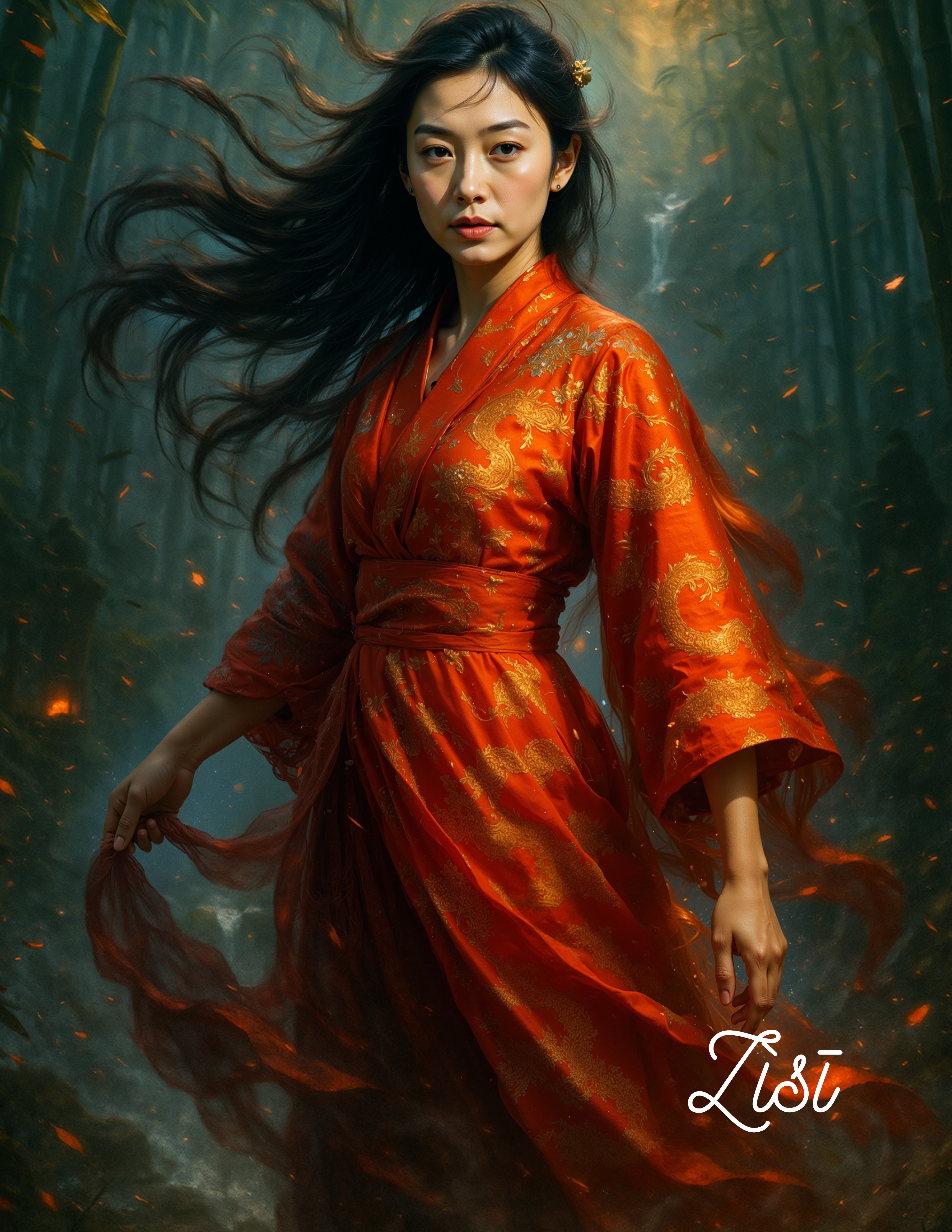
Name: Zìsī
Age: 18
Favorite Hobby: Writing
Pet Peeves: Men who try to control her
Goal in Life: Independence
Ideal Date: Discussing books and philosophy
Red Flags: Willing to do anything to obtain her goals
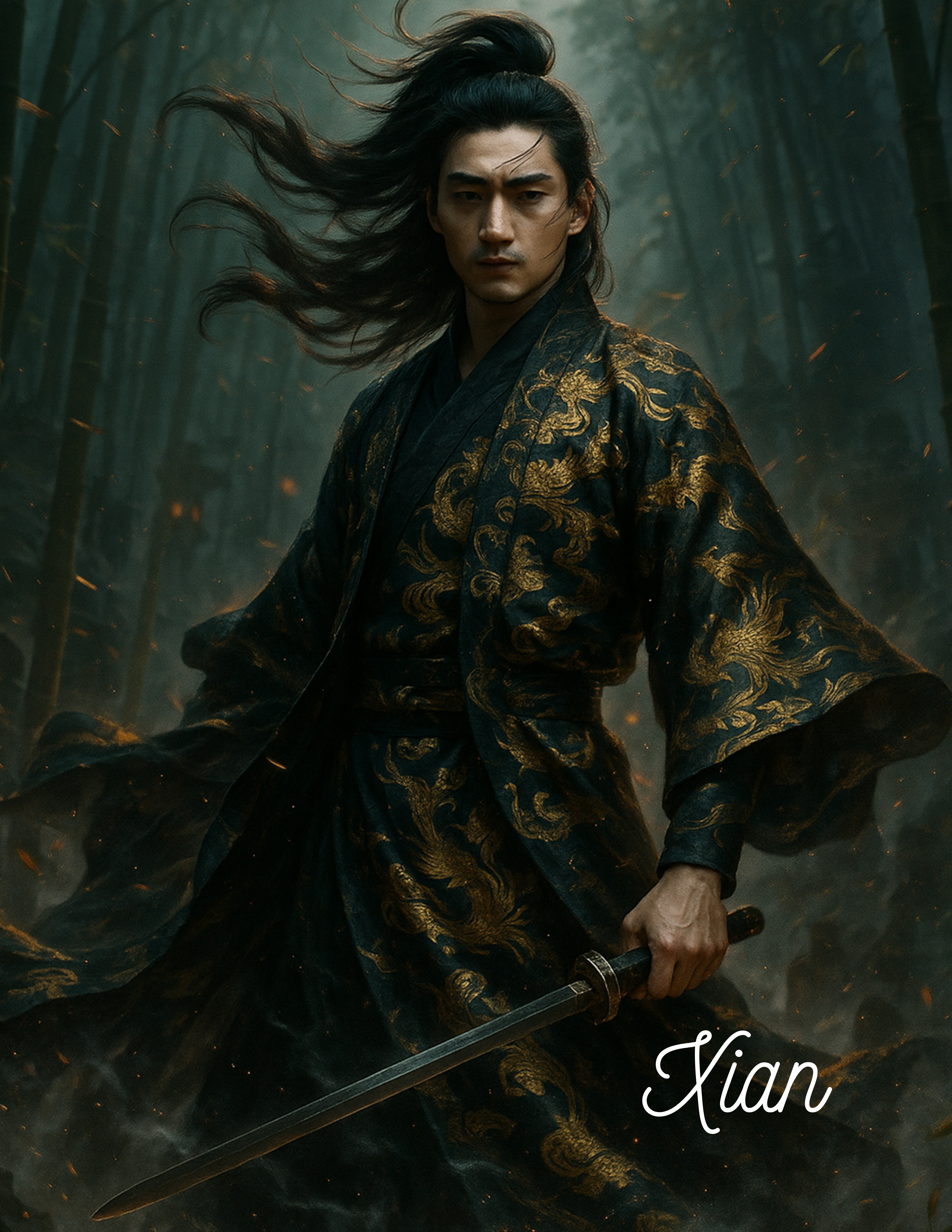
Name: Xian
Age: 32
Favorite Hobby: Drinking and seducing women
Pet Peeves: Women who talk too much, employers who micromanage
Goal in Life: Become head guard for a powerful lord
Ideal Date: Drinking and then going back to his place until dawn
Red Flags: Prefers younger, naïve women
Translations & Interesting Things
Note: Any translations marked “Chinese Traditional” are from Google Translate, you can also find these links on the book page on my website. Any names from the book that are not listed do not have a special meaning behind them.
Ancestor Altars & Tablets – learn more about the altars and tablets here
Bàba – Dad
Chaste Widow – Widowed women were encouraged to stay as widows, and avoid remarrying, it started to become controversial by the Qing era
Chenghuangshen – Village/Town/City God
Chinese Constellations – full list of various star constellations
Chinese Hell, Penance & Rebirth – belief that depending on your sins in life you’d be sent to a certain level of hell for your sins to be repented for before you could be reborn
Chongzhen Calendar – I intentionally didn’t mention month or weekday names, but kept this calendar in mind when writing. The link also talks about days of the week, and hours of the day, as well as the history from before the Qing dynasty to more modern times.
Concubines in Qing China – YouTube Video by Amimisu
County Magistrate – Although I gave Zìsī’s husband this title, I took a lot of liberties with the rest of it.
Dìyù – Chinese Hell
Empresses in Qing China – YouTube Video by Amimisu
Fǔbài – Corrupt (Chinese Traditional)
Funeral Rites – You can learn more about funeral rites, mourning, burials, etc here
Gaodixie – a special form of platform shoe, intended to mimic lotus feet for women who had not had their feet bound, as it forced them to take small steps
Golden Lilies & Lotus feet – AKA foot binding, was starting to fall out of favor in the Qing dynasty, but was still a struggle to eradicate and really only began to die out in the 20th century
Guanyin – Short for Guanshiyin, traditionally depicted as male in India, and female or androgynous in China (I took a lot of liberties with the depiction of this deity, and what they would generally be involved in)
Gǔdú-guǐ – ghosts that were hateful to others in life that could transform into insects
Guǐ yuè – Chinese Ghost Month, when the Ghost Festival is celebrated
Hu Shen – A Chinese fox spirit (there are many names for these, and I took a lot of liberties with the depiction of this spirit, and what they would generally be involved in)
Imperial City/Forbidden City – The heart of China, where the Emperor ruled from
Jiǎo – Handsome (Chinese Traditional) (not the top translation at the link)
Jin Shengtan – A Qing era Chinese author
Li – approximately 0.5km or 0.311 miles, but has varied in length over time
Lín Yǐníng – A Qing era Chinese poet
Lords of Hell – Referring to the “Ten Kings of Hell”
Luoshen – A Chinese River Goddess with various origin stories (I took a lot of liberties with the depiction of this deity, and what they would generally be involved in)
Māma – Mom
Mǎmiàn – Horse-Face, one of two guardians of the underworld
Měilì de – Beautiful (Chinese Traditional)
Niútóu – Ox-Head, one of two guardians of the underworld
One hundred and sixty-eight – meaning “fortune all the way”.
Parricide – Deliberate killing of one’s parent; there’s actually a few layers that go into this. The traditional punishment for this, was a very painful death, as you can read in this document (pdf, page 2, first column, section 5), and this document (pdf, page 167, left page, section 1). For the purposes of the story, it was deemed an intentional killing. You were then believed to be condemned to a special level of hell, which you can learn about here.
Penghou – AKA Pénghóu, a Chinese tree spirit (I took a lot of liberties with the depiction of this spirit, and what they would generally be involved in)
Plum Blossoms – these actually bloom in winter and early spring, and are a beautiful flowering tree, and you see it a lot in historical Chinese art
Pópo – Husband’s mother
Pǔdù – Ghost Day, when spirits and the ghosts of ancestors would rise from the lower realms
Qing Dynasty – The dynasty that was ruling when this book was set, although I don’t mention a specific year.
Qingming Festival – Ancestor’s Day or Tomb Sweeping Day
Queue hairstyle – (aka cue) top of the head is shaved, and the rest of the hair grown long, and often braided
Rújiào – Confucianism
Shù – Forgiveness, a Confucian value
Slavery in China – Not necessarily how those in the US would think of slavery, but yes, there was slavery!
Three – You’ll see the number three come up a lot, or things going in intervals of three, or progressing in threes, that was intentional on my part because three is such an important number in Chinese numerology. It can be a good OR bad number, which made it perfect for many of the significant events that occur in the book
Tiān – Day (Chinese Traditional)
Wedding Customs & Superstitions – I only used some of these, and skipped over others. There’s some interesting traditions and superstitions, however!
Xiǎo xióngmāo – Red panda (Chinese Traditional), Jiǎo’s grandmother’s childhood nickname for him, I used this to avoid using a feminine dead name for Jiǎo so early in the book
Xīng guān – Chinese star constellations
Xinzhai – AKA Zhang Chao, a Qign era Chinese author
Yèwǎn – Night (Chinese Traditional)
Yīnyuán hóngxiàn – The red thread of fate/marriage, tying a person to their one true love
Yuè Xià Lǎorén – The deity in charge of “the red thread of fate” in Chinese folklore
Zìsī – Selfish (Chinese Traditional)
Zǔfù – Paternal grandfather
Zǔmǔ – Paternal grandmother


